Panellists highlight progress, challenges in transitioning to a circular economy in South Africa

Panellists discuss the role of EPR, resource recovery and waste innovation in South Africa’s growing circular economy
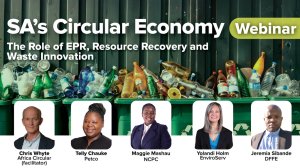


With growing waste generation and limited landfill space in South Africa, sustainable resource management, extended producer responsibility (EPR), resource recovery and waste innovation play an important role in shaping the local circular economy.
With this in mind, panellists participating in Creamer Media’s Circular Economy webinar, held on July 29, explored various topics, such as the progress being made in implementing EPR regulations and how South Africa can address growing pressure being placed on landfill capacity, inconsistent waste collection services and the need for investment in recycling and recovery infrastructure.
Facilitated by nonprofit organisation African Circular Economy Network Foundation co-founder Chris Whyte, panellists discussed South Africa's progress and challenges in transitioning to a circular economy.
Panellists included producer responsibility organisation (PRO) Petco CEO Telly Chauke, National Cleaner Production Centre South Africa skills senior project manager Maggie Mashau, EnviroServ national onsite manager Yolandi Holm and Department of Forestry, Fisheries and the Environment (DFFE) director of chemicals and waste policy and information management Jeremia Sibande.
“We're facing undeniable pressures in terms of our landfills, the strained infrastructure and the need for sustainable resource management. I like to think that South Africa doesn't have a waste problem, but rather a collection and a processing gap, and that's the challenge, but it also represents a massive opportunity,” said Whyte.
He noted that EPR regulations had moved in the right direction, placing new obligations on producers to take accountability for the lifecycle of their products, adding that there had also been innovation in resource recovery.
He also recognised the critical role that informal waste reclaimers played in the existing recycle value chains, highlighting the need to integrate them formally into the economy.
Mashau discussed the importance of resource efficiency and cleaner production in improving competitiveness while reducing waste, energy, and material consumption.
She argued that South African manufacturers should view resource efficiency and the circular economy as a business competitiveness strategy rather than just as an environmental agenda.
She said resource efficiency intervention could improve productivity, reduce operational costs and strengthen compliance with environmental regulations, adding that producing with fewer resources built resilience and competitiveness for manufacturers and, subsequently, unlocked local and international markets for business.
Additionally, Chauke discussed how EPR could become a catalyst for innovation and circular economy growth, noting that EPR should not merely be seen as a compliance requirement, but more as a lever for economic activity.
Chauke argued that South Africa had great ambitions for industrialisation and local manufacturing, noting, however, that there was a gap around policy coherence and enablers to protect existing installations in terms of recycling capacity and, secondly, to stimulate supporting economic activity.
She highlighted the importance of creating a coherent policy landscape across the different economic sectors of the country, including infrastructure, fiscal incentives and a changed tax regime that secured the sustainability and profitability of existing installed capacity.
Chauke thus noted the importance of protecting existing capacity but also upscaling local manufacturing capacity.
Also speaking on EPR, Sibande explained that, since EPR regulations came into effect in 2021, the DFFE had recorded a number of successes, with over 2 000 companies having registered on the department’s EPR portal.
He acknowledged, however, that noncompliance with EPR regulations remained a challenge among some companies, noting that the DFFE was working with PROs to address this issue and bring as many producers as possible into compliance.
He explained that the department had acknowledged weaknesses in the implementation of EPR over the past five years and would be conducting an overall EPR review.
Additionally, speaking during a question-and-answer session, Sibande noted that the DFFE was engaging with the Department of Trade, Industry and Competition to ensure South African products remained globally competitive amid the implementation of global regulations, such as the EU’s Packaging and Packaging Waste Regulation, which introduced clear stringent requirements across the packaging value chain, specifically with regards to imports and exports.
“It’s work in progress,” he said.
In terms of practical steps that organisations could take to improve resource recovery and reduce disposal costs, Holm emphasised the importance of organisations understanding exactly what waste they were generating and where the generation points were.
She also emphasised the importance of partnering with the right service providers, such as EnviroServ.
“When we get to a customer site, we ensure that we understand their full process, what waste streams are being generated where and then we can start putting a sustainability plan together and a waste management plan together that will support their objectives. I always believe in separation at source. That . . . is the most important part.”
Article Enquiry
Email Article
Save Article
Feedback
To advertise email advertising@creamermedia.co.za or click here
Projects
Latest Multimedia

Showroom
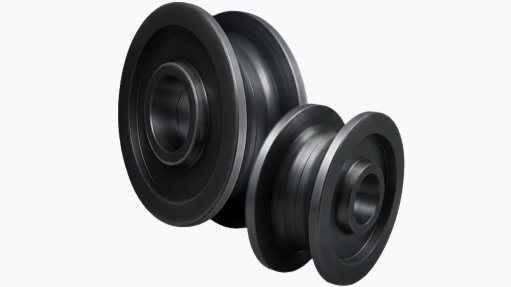
Mitsubishi Chemical Advanced Materials South Africa (Pty) Ltd is a leading manufacturer of high-performance engineering plastics for the mining...
VISIT SHOWROOM
ALBIS FLANGES — founded in 1965 — is a petro-chemical approved manufacturer of flanges and fittings in most grades of steel, listed with Sasol,...
VISIT SHOWROOM

Press Office
Announcements
What's On
Subscribe to improve your user experience...
Option 1 (equivalent of R125 a month):
Receive a weekly copy of Creamer Media's Engineering News & Mining Weekly magazine
(print copy for those in South Africa and e-magazine for those outside of South Africa)
Receive daily email newsletters
Access to full search results
Access archive of magazine back copies
Access to Projects in Progress
Access to ONE Research Report of your choice in PDF format
Option 2 (equivalent of R375 a month):
All benefits from Option 1
PLUS
Access to Creamer Media's Research Channel Africa for ALL Research Reports, in PDF format, on various industrial and mining sectors
including Electricity; Water; Energy Transition; Hydrogen; Roads, Rail and Ports; Coal; Gold; Platinum; Battery Metals; etc.
Already a subscriber?
Forgotten your password?
Receive weekly copy of Creamer Media's Engineering News & Mining Weekly magazine (print copy for those in South Africa and e-magazine for those outside of South Africa)
➕
Recieve daily email newsletters
➕
Access to full search results
➕
Access archive of magazine back copies
➕
Access to Projects in Progress
➕
Access to ONE Research Report of your choice in PDF format
RESEARCH CHANNEL AFRICA
R4500 (equivalent of R375 a month)
SUBSCRIBEAll benefits from Option 1
➕
Access to Creamer Media's Research Channel Africa for ALL Research Reports on various industrial and mining sectors, in PDF format, including on:
Electricity
➕
Water
➕
Energy Transition
➕
Hydrogen
➕
Roads, Rail and Ports
➕
Coal
➕
Gold
➕
Platinum
➕
Battery Metals
➕
etc.
Receive all benefits from Option 1 or Option 2 delivered to numerous people at your company
➕
Multiple User names and Passwords for simultaneous log-ins
➕
Intranet integration access to all in your organisation